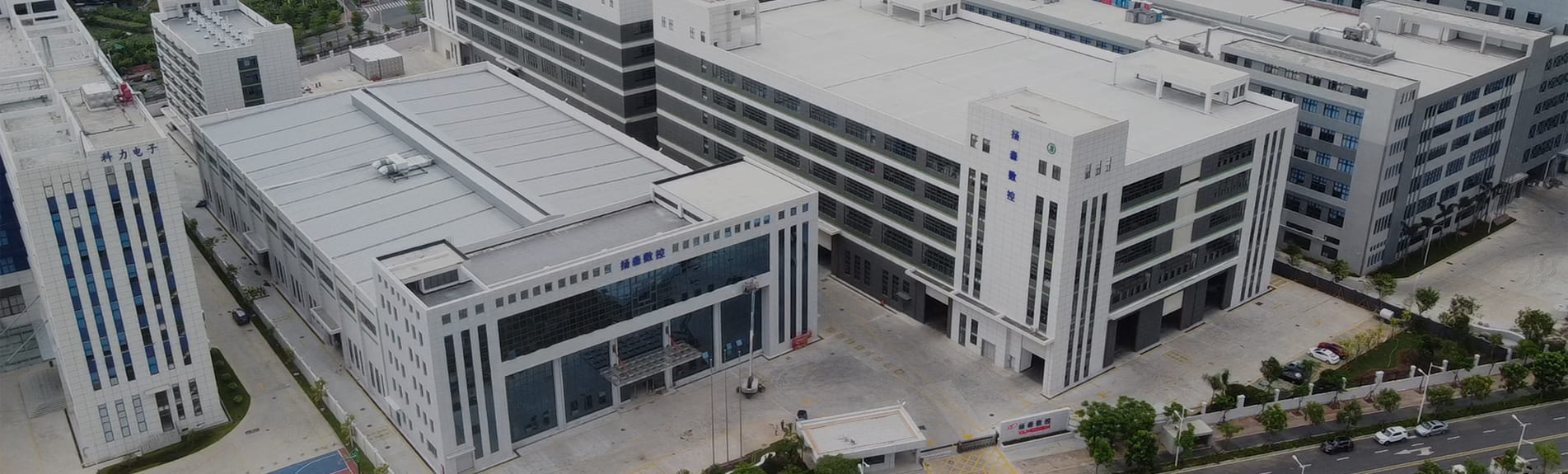
Every vertical machining center looks broadly the same from the outside: a fixed column, a spindle pointing down, a table that moves in X and Y. What separates a machine that prints money in an automotive plant from one that struggles in a die shop is not the layout — it is the guideway type, the spindle taper, and the travel envelope. This guide walks through the 10 industries that buy the most CNC vertical machining centers, the parts each one actually machines, and the machine specification that matters most in each case.
Rather than repeating that "precision matters" for every sector, each section below names the parts, the machining problem behind them, and the configuration that solves it. If you are shortlisting one of the many CNC vertical machining centers on the market right now, the comparison table in the next section is the fastest way in.
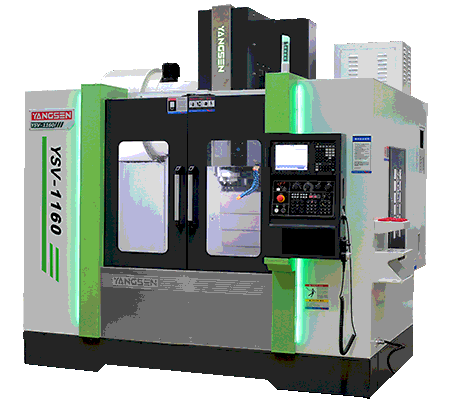
If you only read one section, read this table. It maps each industry to the parts it machines, the dominant machining demand, and the Yangsen configuration built for it.
Industry |
Typical Parts |
Dominant Demand |
Yangsen Configuration |
Automotive |
Cylinder heads, gearbox housings, brackets |
Cycle time on aluminium, high duty cycle |
YSV-855 / YSV-1060 — roller linear guideway, BBT-40, 10,000 rpm |
Mold & Die |
Injection molds, stamping dies, electrodes |
Rigidity in deep cavities, surface finish |
YSP-1270 / YSL-1580 — box way, BBT-50 |
Aerospace |
Structural fittings, housings, blade-form parts |
Multi-face access in one setup |
YSU-800-5X / YSV-855-5X — 5-axis, HSK-A63 |
Medical Devices |
Implants, instrument bodies, fixtures |
Small complex geometry, frequent changeover |
YSV-855-5X — 5-axis linkage with RTCP |
3C Electronics |
Heat sinks, housings, connector plates |
Volume throughput on small parts |
YSD4-260 — four spindles, BT30, 24,000 rpm |
Energy Equipment |
Valve bodies, flanges, gearbox cases |
Large envelope, heavy table load |
YSM-4027 / YSL-1890 — double column |
Rail Transit |
Bogie components, brake parts, frames |
Long parts, consistent batch work |
YSM-4027 / YSL-1580 |
Construction Machinery |
Hydraulic blocks, pivot housings, arms |
Heavy interrupted cuts in steel |
YSP-1580 / YSL-1890 — box way |
Mining & Metallurgy |
Crusher parts, liners, rolling mill housings |
Mass, toughness, oversized parts |
YSP series / YSM double column |
Job Shops |
Mixed low-volume work |
Versatility, fast setup |
YSV-1060 — 28-tool ATC, 1,000 kg table |
Before the industry-by-industry breakdown, it helps to know the three specifications that do most of the work in a VMC selection. Almost every "which machine should I buy" question comes down to these.
This is the single biggest fork in the road, and it is where most mismatched purchases happen.
A die shop that buys a fast linear-guideway machine to save on cycle time will spend that saving back on chatter and tool wear. An automotive shop that buys a box way machine for aluminium will pay for rigidity it never uses.
Spindle choice follows the material far more closely than it follows the headline speed figure.
A common mistake is to compare machines on spindle rpm alone. A 24,000 rpm BT30 spindle and a 6,000 rpm BBT-50 spindle are not competing for the same job — they are built for opposite ends of the chip load spectrum.
Travel sets the part envelope; table load sets whether the part plus fixture can sit on it at all; tool capacity sets how many setups you can avoid.
Model |
Travel X/Y/Z (mm) |
Worktable (mm) |
Max Table Load |
Tool Capacity |
YSV-855 | 850 / 550 / 550 | 1000 × 550 | 800 kg | 28 |
YSV-1060 | 1000 / 600 / 680 | 1020 × 570 | 1,000 kg | 28 |
YSP-1270 | 1200 / 700 / 600 | 1360 × 600 | 800 kg | 24 |
YSL-1580 | 1500 / 800 / 700 | 1700 × 800 | 1,500 kg | 24 |
YSM-4027 | 4000 / 2700 / 1000 | 4000 × 2300 | 16 t | 24 (opt. 40/60) |
Note the YSL-1580: a 1,500 kg table load on a 1500 mm X-axis is what lets a die shop clamp a heavy mold base and still have Z-travel left to reach into the cavity. That combination — not the spindle speed — is what makes or breaks the job.
The ten sectors below are ordered by how many vertical machining centers they buy, starting with the largest.
Typical parts: cylinder heads and blocks, gearbox and clutch housings, steering knuckles, brake components, mounting brackets, EV battery tray frames.
What makes them demanding: most of this work is aluminium at high volume, which shifts the problem away from raw cutting power and onto cycle time, thermal stability over a long shift, and chip evacuation. A saving of eight seconds per part is a real number when the line runs 3,000 parts a week.
What to look for: roller linear guideways for fast rapids, a BBT-40 spindle at 10,000 rpm for aluminium chip loads, and an ATC large enough to hold a full family of tools so the machine is not waiting on an operator between variants.
Our machines: the YSV-855 (850/550/550 mm travel, 48/48/48 m/min rapid traverse, 28-tool ATC) suits brackets and medium housings; the YSV-1060 (1000/600/680 mm, 1,000 kg table load) takes larger cases and manifolds. Both run BBT-40 at 10,000 rpm on roller linear guideways, which is the configuration most automotive parts manufacturing lines settle on.
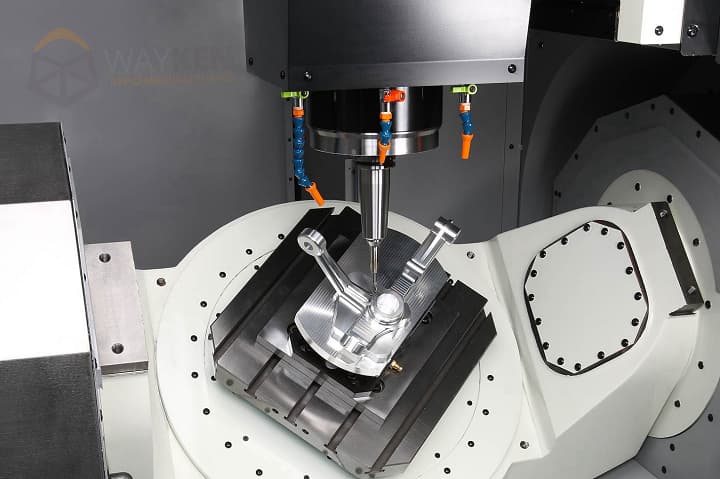
Typical parts: injection mold cavities and cores, stamping and progressive dies, die-cast tooling, graphite and copper electrodes, mold bases.
What makes them demanding: this is the opposite of automotive work. Batch size is often one. Cuts are deep, long, and frequently interrupted, in hardened tool steel. Any chatter shows up directly on the cosmetic surface of the finished part, which means it shows up on every part that mold ever produces.
What to look for: damping above all. Box ways, a BBT-50 spindle for low-speed torque, and enough Z-travel to reach the bottom of a deep cavity with a tool of reasonable length rather than an over-extended one.
Our machines: the YSP-1270 runs box ways on all three axes with a Turcite-lined bed made from H300 cast iron — the 10 m/min rapid traverse is a design choice in favour of stiffness. For larger mold bases in mold and die production, the YSL-1580 pairs 1500/800/700 mm travel with a 1,500 kg table load and a box-way Z-axis.
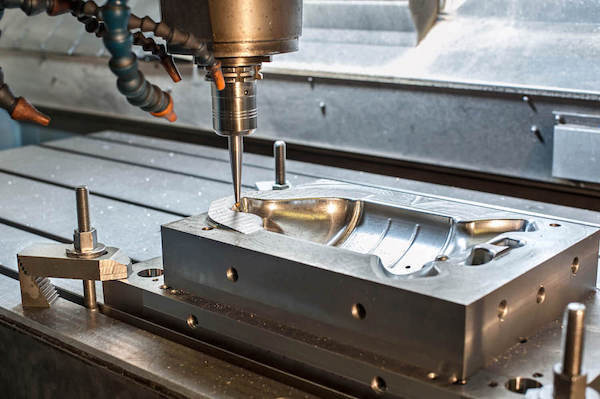
Typical parts: structural fittings and brackets, actuator and pump housings, blade-form components, landing gear sub-components, and defence-sector equivalents.
What makes them demanding: the materials are difficult — titanium, Inconel, high-strength aluminium — and the geometry usually requires cutting on several faces. Every additional setup on a part like this is another chance to lose alignment, so the real goal is to finish in as few setups as possible. Full traceability of the process is expected as standard.
What to look for: 5-axis capability with RTCP so the tool centre point stays put while the part rotates, a short and stiff HSK taper, and a spindle that holds torque at the low speeds titanium demands.
Our machines: the YSU-800-5X carries a Siemens ONE control, a Ø800 mm dual-drive trunnion table, an HSK-A63 motorized spindle to 18,000 rpm, a 32-tool magazine and a 1,000 kg table load. For more compact aerospace component machining, the YSV-855-5X offers 5-axis linkage with RTCP and program look-ahead on a smaller footprint.

Typical parts: orthopaedic implants, bone plates and screws, surgical instrument bodies, dental components, imaging equipment housings and fixtures.
What makes them demanding: parts are small, geometrically complex, and made from titanium or medical-grade stainless. Batches are short and change often, so setup time is a larger share of total cost than cutting time. Surface condition on an implant is a functional requirement, not a cosmetic one.
What to look for: 5-axis linkage to reach compound surfaces in one setup, a high-speed spindle for small-diameter tools, and a tool magazine big enough that a changeover does not mean reloading the carousel.
Our machines: among our 5-axis machining centers, the YSV-855-5X is the natural fit here — 5-axis linkage with RTCP, BBT-40 spindle to 10,000 rpm, 28-tool ATC, on a 850/550/550 mm envelope that suits small parts without wasting floor space. Where higher spindle speed is needed for fine instrument work, the YSU-800-5X and its 18,000 rpm HSK-A63 motorized spindle takes over.
Typical parts: CPU and LED heat sinks, laptop and phone housings, connector plates, camera module frames, structural mid-frames.
What makes them demanding: the parts are small and the volumes are enormous. At this scale the economics are decided per-second, and a single-spindle machine simply cannot reach the unit cost the market expects. Finishing quality is visible to the end consumer on housings, so it cannot be traded away for speed.
What to look for: multiple spindles working in parallel, very high spindle speed for small cutters, and a compact, rigid structure that stays stable at those speeds.
Our machines: the YSD4-260 runs four spindles simultaneously — BT30 built-in motorized spindles to 24,000 rpm, each driven by a 7.5 kW motor, on a compact double-column structure with roller linear guideways. Travel is 260/280/200 mm, which is exactly the envelope this class of part lives in. For 3C electronics machining, that means one operator and four parts per cycle.
Typical parts: valve bodies and flanges, pump and compressor casings, wind turbine gearbox housings, generator end covers, heat exchanger tube plates.
What makes them demanding: size and mass. These parts arrive as castings or forgings that are heavy before a single chip is cut, and the machining is mostly face milling, boring and drilling of bolt patterns across a large area. Nothing about the cut is exotic — the constraint is simply whether the machine can hold the part and reach across it.
What to look for: travel and table load first, spindle torque second, everything else after that.
Our machines: the YSM-4027 double column machining center gives 4000/2700/1000 mm of travel over a 4000 × 2300 mm table rated at 16 tonnes, with heavy-load roller linear guideways on X/Y and a T-type ram box way on Z. For mid-size casings in energy equipment machining, the YSL-1890 covers the ground between a standard VMC and a gantry.
Typical parts: bogie frame components, brake discs and calipers, coupler parts, traction motor housings, car body fittings.
What makes them demanding: parts are long, heavy, and produced in repeating batches against fixed safety standards. Consistency across a batch matters more than raw speed, and rework on a certified part is expensive.
What to look for: a long X-axis so a full frame member fits in one setup, a rigid structure that does not drift over a long production run, and a control that handles repeat programs cleanly.
Our machines: the YSM-4027 handles full-length frame components within its 4000 mm X-axis. For brake and coupler parts, the YSL-1580 offers 1500 mm of X-travel with a 1,500 kg table load and hybrid guideways — roller linear on X/Y for traverse, box way on Z where the cutting force lands.
Typical parts: hydraulic valve blocks, pivot and boom housings, track frame components, gearbox cases, cylinder end caps.
What makes them demanding: thick steel and cast iron, with heavily interrupted cuts across webs, ribs and cored holes. Hydraulic valve blocks in particular combine deep drilling with cross-bores that must intersect cleanly. This is the work that punishes a machine with insufficient damping.
What to look for: box ways, a BBT-50 spindle with torque at low rpm, and a bed heavy enough to absorb the shock loading of interrupted cutting.
Our machines: the YSP-1580 brings box-way construction to a 1500 mm X-axis. Where parts run larger, the YSL-1890 extends the envelope while keeping the box-way Z-axis that this work depends on.
Typical parts: crusher jaw and cone components, mill liners and liner bolts, conveyor drive housings, rolling mill housings and chocks.
What makes them demanding: parts are oversized, heavy, and often made from wear-resistant alloy that is hard on tooling before machining even begins. Downtime in a mine or mill is costed by the hour, so spare-part turnaround is a competitive factor in its own right.
What to look for: maximum envelope and table load, box-way rigidity, and a spindle that delivers torque rather than rpm.
Our machines: the YSM-4027 double column machine handles rolling mill housings and large drive casings within its 16-tonne table rating. Medium components suit the YSP series box-way machines, where the combination of a Turcite-lined H300 cast iron bed and BBT-50 spindle is built for exactly this class of material.
Typical parts: whatever came in this week — prototypes, spares, short production runs, fixtures for other people's machines.
What makes them demanding: unpredictability. A job shop cannot specialise its way to the right machine, because next month's work may look nothing like this month's. The binding constraint is setup time: every hour spent changing over is an hour not being billed.
What to look for: a general-purpose envelope that covers the most common part sizes, the largest practical tool magazine, and enough table load to take a fixture plate plus the part without argument.
Our machines: the YSV-1060 is the workhorse of this category — 1000/600/680 mm travel, a 1020 × 570 mm table rated at 1,000 kg, a 28-tool ATC, BBT-40 spindle to 10,000 rpm on roller linear guideways. It covers most of what walks through the door, and the tool capacity means a mixed week does not turn into a week of tool changes.
Selection gets much shorter once these four questions are answered in order.
Q: Which industry uses CNC vertical machining centers the most?
A: By machine count, automotive and general job-shop manufacturing buy the most vertical machining centers, because both run part sizes that fit a standard VMC envelope. By value per machine, mold and die work and aerospace tend to specify higher, since those sectors buy box-way or 5-axis configurations rather than standard ones.
Q: Can a vertical machining center handle large parts?
A: A standard VMC is limited by its travel and table load — 1500 mm of X-travel and a 1,500 kg table is typical of the upper end, as on our YSL-1580. Beyond that, the part moves to a double column machine: our YSM-4027 offers 4000 mm of X-travel and a 16-tonne table.
Q: Should I choose roller linear guideways or box ways?
A: Match it to the cut, not to the spec sheet. Light, fast cutting in aluminium at volume favours roller linear guideways. Heavy or interrupted cutting in steel and cast iron favours box ways, which trade traverse speed for damping. A hybrid machine such as the YSL-1580 puts roller linear guideways on X/Y and a box way on Z.
Q: When is a 5-axis machining center worth the investment over a 3-axis VMC?
A: When the part needs three or more setups on a 3-axis machine. At that point the accumulated setup labour, fixturing, and alignment risk usually cost more than the price difference. Aerospace and medical work crosses this line routinely; automotive and job-shop work often does not.
Q: What spindle taper do I need — BT-40 or BT-50?
A: BT-40 (we use BBT-40 at 10,000 rpm) suits aluminium, thin walls and high part counts where acceleration matters. BT-50 (BBT-50 at 6,000–8,000 rpm) transmits more torque at low speed for steel, cast iron and deep-cavity roughing. Choose by material and depth of cut rather than by maximum rpm.
Q: How many tools should the magazine hold?
A: Count the tools in your largest single program, then add the tools you would otherwise swap in during a changeover. Our standard VMCs carry 24–28 tools; the YSU-800-5X carries 32 and the YSM-4027 can be specified up to 60.
The ten industries above buy vertical machining centers for very different reasons. An automotive plant is buying seconds per part. A die shop is buying damping. An electronics manufacturer is buying four spindles instead of one. A mining supplier is buying table load. The machine that is right for one of them is, quite often, the wrong machine for the next.
If you can describe your largest part, its weight with fixturing, and the material you cut most often, matching it to the right configuration is a short conversation rather than a long selection process.
Contact CNC Yangsen to find the right CNC machining solution for your production needs.